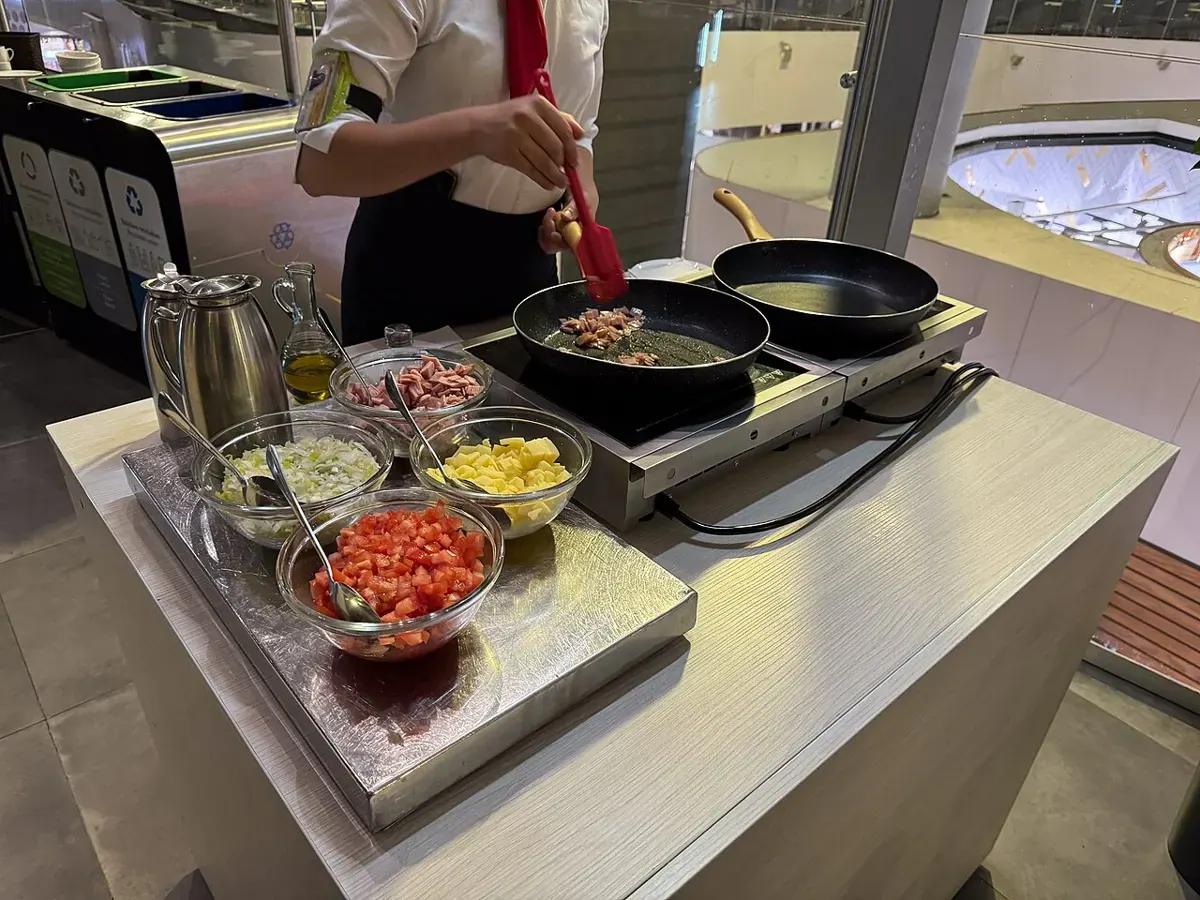
An induction hob uses a changing magnetic field to produce heat in suitable cookware. It does not work in the same way as a glowing resistance element or a gas flame. This can offer responsive control, but the cooking experience depends on the pan, the appliance and the electrical installation.
Check the cookware first
Many induction-compatible pans have a magnetic base, but a quick magnet check is only a starting point. Base size, flatness and construction also matter. A small pan on a large cooking zone may behave differently from a well-matched one. Review the hob's guidance before replacing an entire cookware collection unnecessarily.
Understand the power arrangement
A portable unit and a full built-in hob can have very different electrical requirements. A qualified electrician should assess a permanent installation and any required circuit work. Some hobs share power across zones, so the maximum setting on every ring may not be available simultaneously. Ask how this affects the way the household actually cooks.
Keep ventilation in the plan
Switching away from combustion does not remove steam, grease or particles produced by cooking food. Appropriate kitchen extraction remains useful. Learn the controls, start with familiar dishes and remember that hot cookware can leave the glass surface hot. Energy performance is one part of the decision, alongside accessibility, cleaning and cooking preferences. A successful change is not simply a new hob fitted into an old opening; it is a workable combination of power supply, cookware, ventilation and everyday habits.