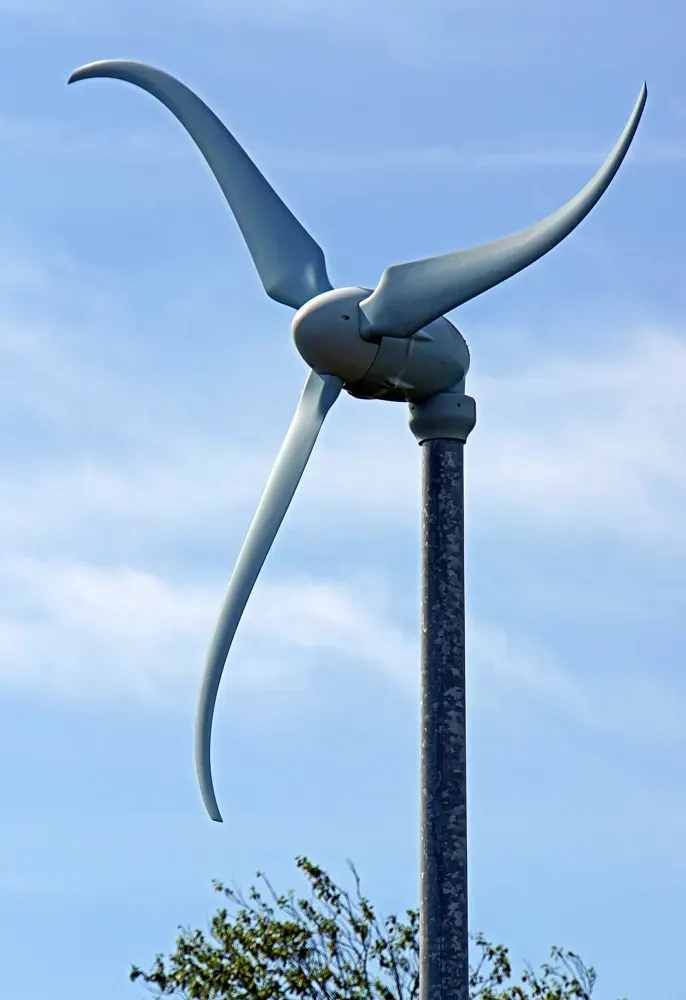
A place can feel windy at human height while offering poor conditions for a small turbine. Gusts around buildings and trees create turbulence, and a low-mounted rotor may spend much of its time in disturbed air. A useful assessment focuses on sustained wind at the proposed hub height, not how often a patio umbrella tips over.
Begin with obstacles and space
Map nearby buildings, trees, property boundaries and access routes. A tower needs space for installation and maintenance as well as appropriate clearances. Roof-mounted turbines can encounter vibration and turbulent airflow, so their claims deserve careful scrutiny. Request measured or defensibly modeled performance for the actual site rather than a promotional result from an exposed test location.
Compare energy with household demand
The rated power of a turbine describes output under specified conditions. It does not say how much electricity the home will receive in a year. Ask for annual generation assumptions, expected downtime and the equipment needed to connect to the household or grid. Include tower, foundations, controls, wiring and servicing when comparing costs.
Check the quieter alternatives
An efficiency improvement or a suitable solar installation may be easier to maintain in a built-up setting. That does not make small wind useless; open rural sites can have very different conditions from a suburban garden. The point is to let the resource decide. Before purchasing, confirm local planning requirements and the utility's connection process directly. A small turbine is a real electrical and structural installation. Treating it as a decorative appliance is a poor foundation for either performance or safety.