After air passes through a wind turbine, some of its energy has been extracted. The flow behind the rotor is slower and more turbulent than the approaching air. This disturbed region is called a wake. Another turbine placed within it may produce less electricity and experience different mechanical loads.
A wind farm is a coordinated layout
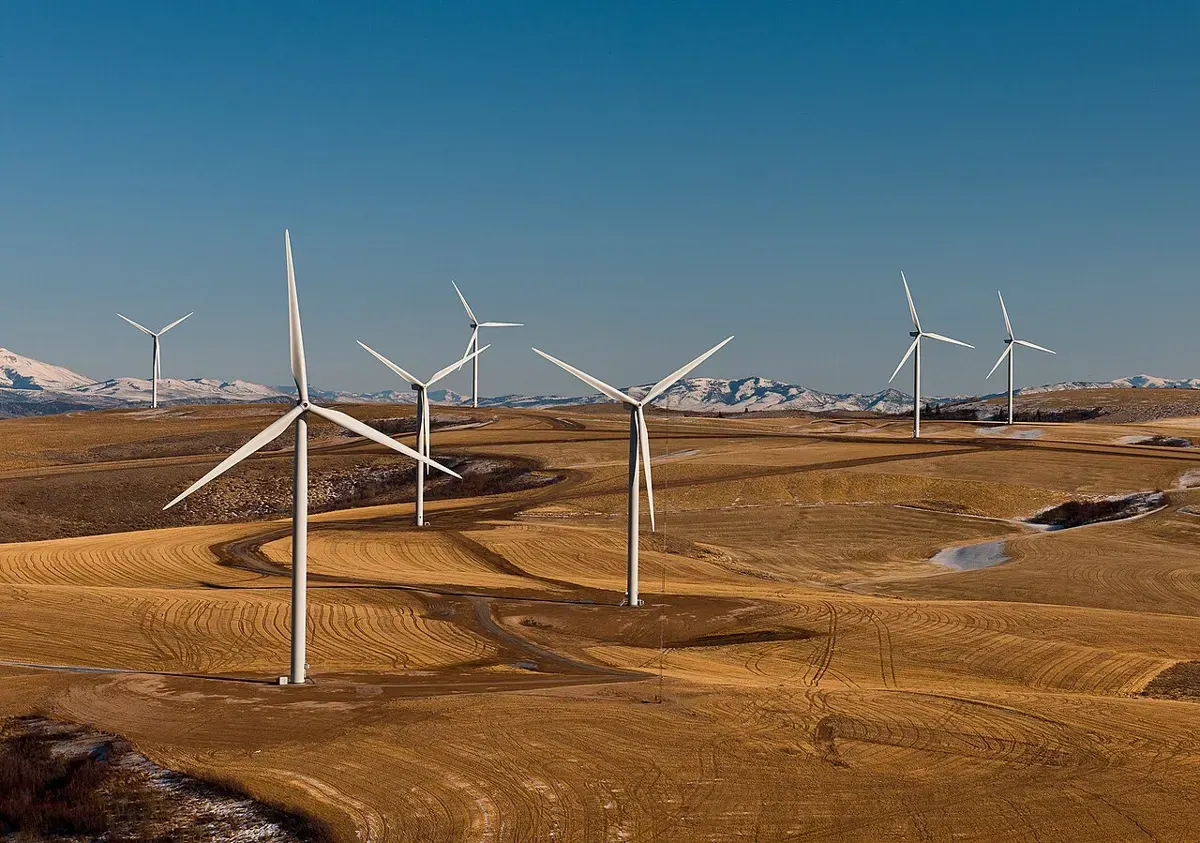
Developers cannot simply pack the largest possible number of turbines into a field. They consider prevailing wind directions, terrain, spacing, boundaries and electrical infrastructure. The best position for one turbine may not produce the best result for the whole group. Wake modeling helps evaluate these interactions across many weather conditions.
More space is not a free solution
Wider spacing can reduce some wake effects, but it may require more land, longer cables and additional roads. Offshore, the available lease area and seabed conditions add constraints. Layout design is a negotiation among energy production, construction, environmental considerations and operation. A neat aerial pattern is not necessarily evidence of an optimal design.
Controls can change the interaction
Some operating strategies adjust how individual turbines face the wind to influence wakes and improve overall output. The details depend on the equipment and conditions, and such strategies do not eliminate the physics. For a reader, the useful lesson is that a wind farm behaves as a system. Multiplying the output of an isolated turbine by the number of machines can overstate what the group will deliver. Project estimates need to include their interaction, just as a road plan must account for traffic rather than only the speed of one car.