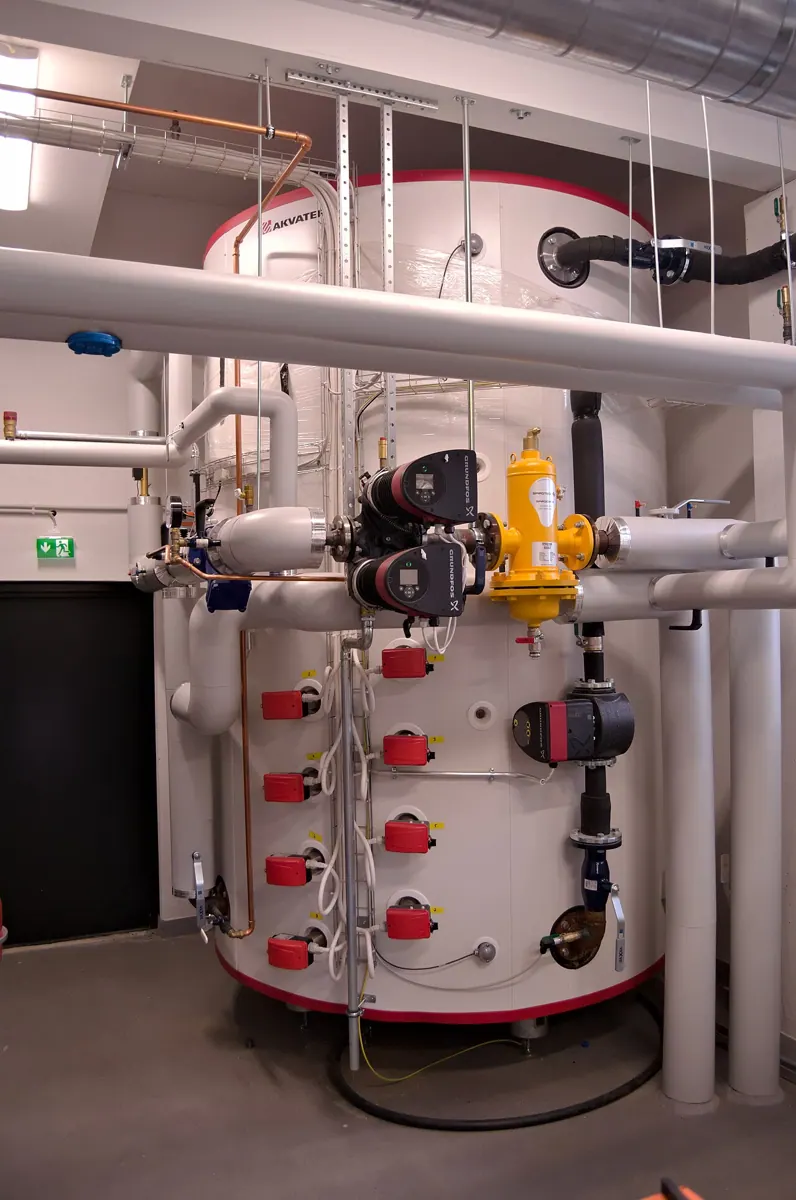
When the final goal is heat, storing heat directly can be useful. A well-insulated hot-water tank is a familiar example. Energy warms the water at one time, and the household draws on that stored warmth later. The tank does not return electricity, but it can still reduce the need to heat water at a particular hour.
Match storage to the service
Thermal storage may serve hot water, space heating or cooling, depending on the system. Its value comes from meeting that specific demand later. It cannot power lighting or charge a phone. This narrower role can be an advantage when it fits the need, but it should not be compared with an electrical battery as though the outputs were interchangeable.
Account for losses and space
Stored heat gradually escapes, with the rate depending on insulation, temperature difference and the installation. Tank size, pipework and available space matter. The system must also follow appropriate temperature and hygiene requirements. Do not lower water temperatures or alter controls casually in pursuit of a small energy saving.
Coordinate the controls
Heating water during a suitable tariff period or a solar-production window can shift demand, provided enough hot water remains available. A schedule should reflect household use and the heating equipment's capabilities. Compare the complete arrangement, including installation and maintenance, with other ways to provide the same service. Thermal storage is a reminder that energy planning works best when it begins with the required outcome. Sometimes the useful question is not how to store more electricity, but how to deliver the same warmth at a better time.