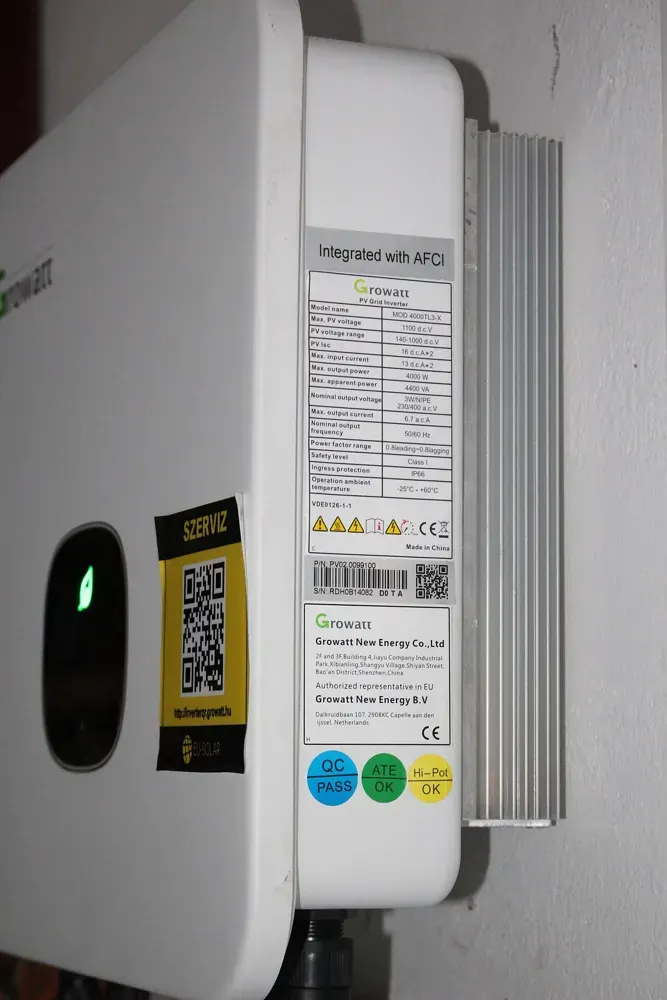
Solar panels produce direct-current electricity. Most household circuits use alternating current. The inverter connects those two worlds, but conversion is only part of its job. It also interacts with system controls, monitoring and, in a grid-connected installation, the electricity network. Choosing one deserves more attention than checking a single efficiency number.
Understand the arrangement
A string inverter serves a group of panels. Microinverters work at individual panels, while some systems pair panel-level optimizers with a central inverter. Roof shape, shading, service access and equipment compatibility influence which arrangement fits. More components can provide finer monitoring, but also create more individual devices to maintain. Ask what would need to be accessed if one component failed.
Read the power limits
Panel capacity and inverter capacity may differ by design. Under some conditions, an array can offer more power than the inverter is configured to deliver, producing a flat top on the output curve. This is often called clipping. Its significance depends on how frequently it occurs and the extra energy collected at other times. A flat graph is a reason to ask a question, not automatically proof of a fault.
Check the everyday details
Find out where the inverter will be mounted, what ventilation it needs, and how the owner receives fault notifications. Clarify whether monitoring requires an internet connection or a subscription. Keep model numbers, warranties and access credentials with the household's energy records. If a battery may be added later, ask for specific compatibility information. The word ready is too vague to replace a list of supported equipment and the additional work a future upgrade would require.